

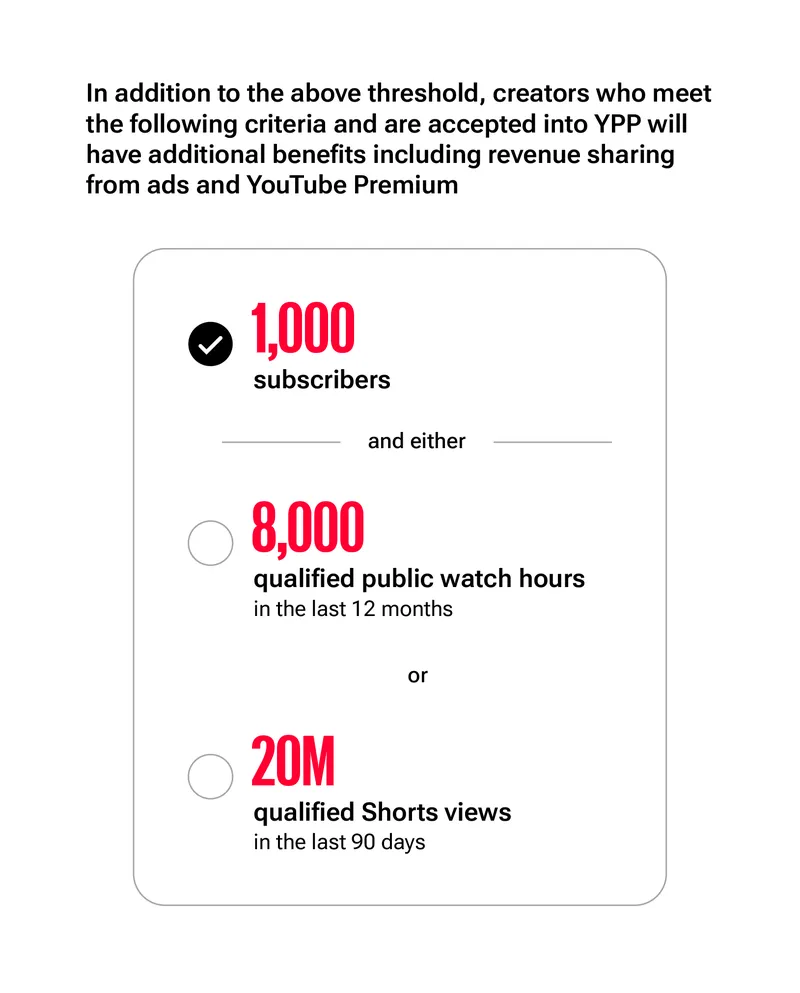
YouTube has just made the huge decision to double its monetisation threshold from 4,000 hours to 8,000 hours. It’s the first alteration the platform has made to its YPP since 2018.
The Shorts threshold has also been doubled from 10 million to 20 million views across a 90-day period, meaning it’s now twice as hard to get monetised.
This won’t affect anyone who hits the current threshold before the 1st of February 2027, and the 1,000 subscriber limit will stay the same. But for new and emerging creators, it sets a much higher bar.
“These updates allow us to invest in new incentive programs that directly support creator growth and the many business models that work across YouTube,” YouTube wrote in its announcement post.
What does it really mean for creators?
The shift to 8,000 watch hours fundamentally changes how new creators must approach the platform. It raises the barrier to entry, delays initial payouts, and forces a strategic shift in content production - and mindset. It’s going to force creators to answer a tough question: am I only in it for the money?
Here are the biggest three hurdles new creators are going to face now:
1. Extended time to first payout
One obvious caveat of the new YPP is that creators hoping to make a full-time income from YouTube must now work unpaid for a lot longer before they can earn ad revenue. If your content isn’t picking up, you’ll at least know that you need a new strategy.
However, with only 12% of content creators considering content as their full-time jobs, the majority of new YouTube creators probably aren’t aiming for this yet.
2. A rise in long-form content
One new trend I can see is creators investing more time into longer video formats, which are growing in popularity anyway. This way, the algorithmic goal shifts heavily from getting mere clicks to keeping viewers engaged for 15 to 30 minutes at a time.
3. Reliance on alternative revenue sources
The creator economy makes it clear how important it is to own your community and diversify your income. YouTube’s move now makes this a necessity.
Creators will need to lock in to fan engagement: promote Super Chats, channel memberships, and Patreon much earlier in their journey.
Also, affiliate marketing can help supplement their income, but this isn’t ever a guarantee and doesn’t replace the consistency of ad revenue.
💡 What's your experience getting paid as a creator?
Are you hit with the same problems time and time again when it comes to getting paid from a brand deal?
We're partnering with Gigapay to run a study on the biggest problems creators face getting paid by brands and agencies, for a more transparent creator economy.
We'd love to know about your experience.
Help your fellow creators 👇


