

Creator marketing has never looked so flashy in 2026. According to Kantar’s latest study, a net 61% of marketers planned to increase their creator spend for this year, with some brands allocating as much as 30% to 40% of their total ad spend to creator content.
However, with greater budget comes greater scrutiny. As Véra Šídlová, Global Creative Thought Leadership Director at Kantar, explains: "The effectiveness era is upon us. The CFOs want to see the receipts. It is no longer just a little bit of money in the overall pot; the expectations are rising on proving how much value it delivers."
To address this, Kantar published The Creator Game Plan: The CMO Guide to Creator Effectiveness, evaluating over 15,000 pieces of creator-led content across 19 countries on TikTok, Instagram, and YouTube. Speaking after her session at CreatorFest, Šídlová shared the core insights from the report.
Here are the key takeaways every marketer and creator needs to know.
1. Beware the engagement trap
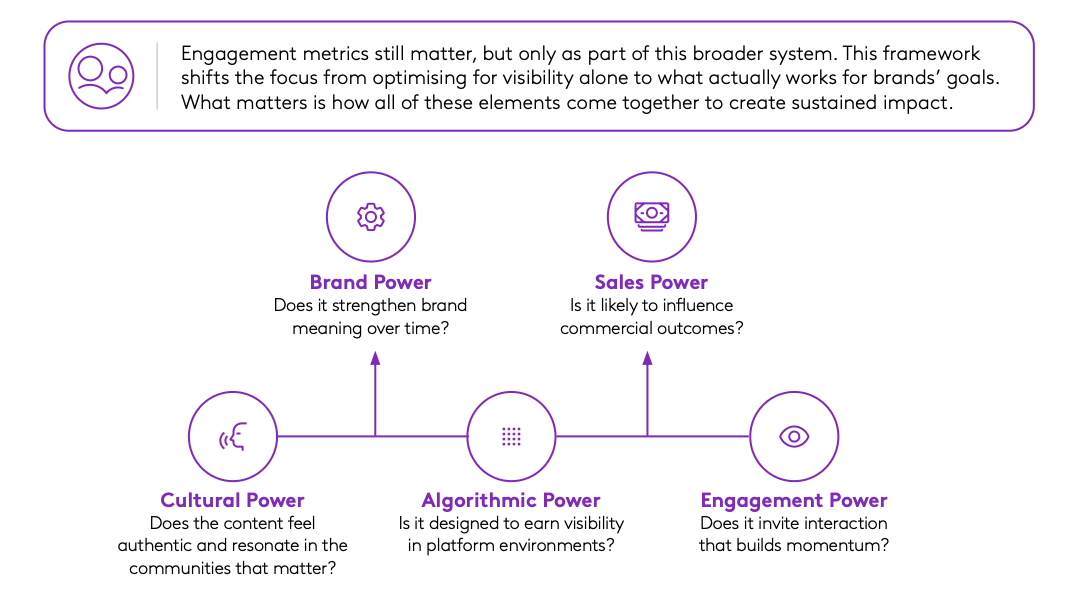
For years, brands have judged creator performance using easily accessible platform metrics: likes, comments, view counts and even shares. However, Kantar’s research reveals that relying on these numbers to guide investment decisions is a mistake.
When comparing platform engagement against long-term brand-building potential and short-term sales likelihood, the metrics align in roughly only one in three cases.
"The platform engagement and brand building aligned in one in three cases, so two-thirds of the time, you would be making the wrong choice if you only made your choice based on engagement," warns Šídlová. "Even if you only looked at highly engaging work, marketers will still be wrong in four out of five cases, because four out of those five will not be driving the brand."
The issue stems from a fundamental misunderstanding of the medium. "The creator’s job and the reason the creator economy even rose to fame was not to make advertising," Šídlová points out. "It was people building communities, people sharing their thoughts and their expertise. The platforms are designed to keep people watching. So if you are coming in as a brand, it is a space that is not designed as a channel for you to occupy. It is fundamentally about shared control.”
2. Understand the three creator strategies
Not all creator partnerships serve the same purpose. Kantar categorises creator involvement into three distinct strategic roles, each with its own strengths and trade-offs:
- Media channel (creator as messenger): The brand uses the creator primarily to access their reach and specific audience demographics. While efficient, restrictive briefs in this category can ruin creator credibility.
- Creative partner (creator as co-author): The brand provides the brief and strategic goals, but allows the creator to shape the execution native to their format.
- Cultural asset (creator as protagonist): The creator sits at the absolute centre of the campaign concept, lending their organic cultural currency directly to the brand.
Šídlová highlights that the industry is seeing a major shift towards using creators as central cultural assets rather than mere distribution channels.
"Looking at the Effie Europe awards, the central role of creators is on the rise," she notes. "Last year, 13% of Effie winners had creators actually at the core of the campaign; the year before it was 7%, and in 2023 prior, it was 0%. Marketers are waking up to the fact that they can be very successful with creators, not as a side thing in the overall media mix, but by bringing them to the centre."
3. The simplest branding hack: say the name out loud
One of the biggest hurdles in creator marketing is establishing strong brand linkage without destroying the natural, authentic feel of the content. Traditional advertising relies heavily on "branding furniture" such as distinctive logos, brand colours, fonts, and sonic jingles. Attempting to force these traditional assets into creator content often backfires, stripping away the editorial style that viewers tune in for.
Kantar analysed the specific creative tactics that successfully build brand awareness and uncovered an unexpectedly simple solution: verbal mentions.
"Only 49% of the pieces of content that we researched had the brand name in the narration from the creator, but it was the highest driver of branding out of everything we saw," says Šídlová.
When a creator speaks the brand name out loud in the audio, brand linkage jumps by an average of 22 percentile points. Yet, half of all sponsored posts relegate the brand name to a text caption or an on-screen tag. Integrating the brand name directly into the narrative story audio is the single most effective, low-friction way to boost brand recall.
4. Creators deserve a seat at the debrief table
A recurring theme at CreatorFest was the need for long-term partnerships and transparent communication between brands and talent. Too often, creators feel "ghosted" after delivering content, receiving brief performance metrics via email rather than constructive creative feedback.
Šídlová believes that closing this feedback loop is crucial for building a true culture of effectiveness.
"I do think they deserve a seat at the table," Šídlová says. "Marketers are in many ways borrowing their skills, their audiences, and their communities. The entire creator economy is built around this idea of trust and authenticity, so creators absolutely deserve a forum to hear back."
By sharing effectiveness data with creators, marketers can refine future briefing processes and help creators better understand how to balance their community's expectations with commercial goals.
"Everyone has been talking about an effectiveness culture, and a huge part of that is transparency, feedback, data, and measurement," Šídlová concludes. "Stepping back, learning, and then using that learning in the thing that you do next is a cornerstone of effectiveness."
Download the full report from Kantar here: The Creator Game Plan: The CMO Guide to Creator Effectiveness.


