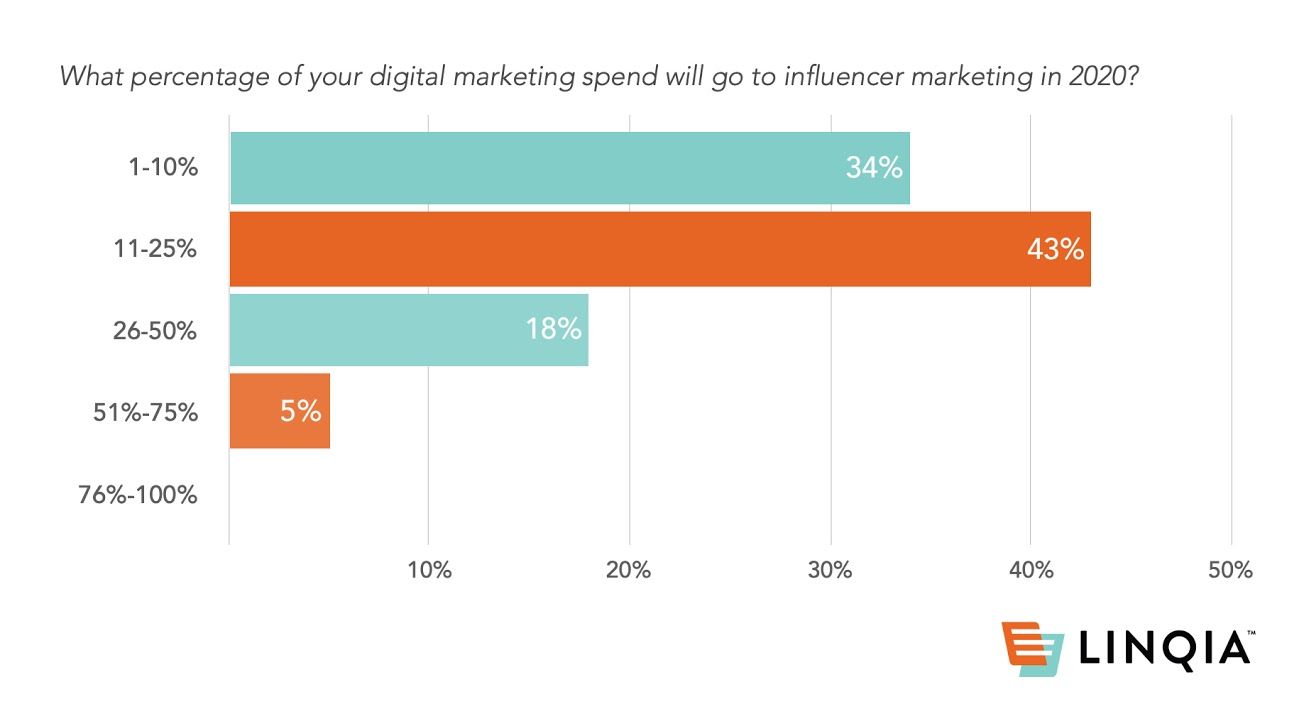
This year, the influencer marketing sector will see more growth, deeper impact, and greater reach according to Linqia’s fourth State of Influencer Marketing 2020 report. The study surveyed 192 marketers on how brands and agencies are using influencer marketing and how they plan to leverage the channel in 2020. Out of those surveyed, 57% plan to increase their influencer budgets in 2020, focusing on campaign measurement accuracy. The growth continues as 40% of marketers are running more than six influencer campaigns, and 20% of these marketers plan to allocate a quarter to half of their budgets to influencer campaigns. “As brands increase their influencer marketing budgets, it’s clear that the industry is advancing into its growth and optimisation phase. Marketers are moving away from celebrity influencers and toward authentic micro-and macro-influencers to create quality content on proven channels like Instagram, while also experimenting on newer platforms, like TikTok,” said Nader Alizadeh, CEO and co-founder of Linqia.
Measuring success
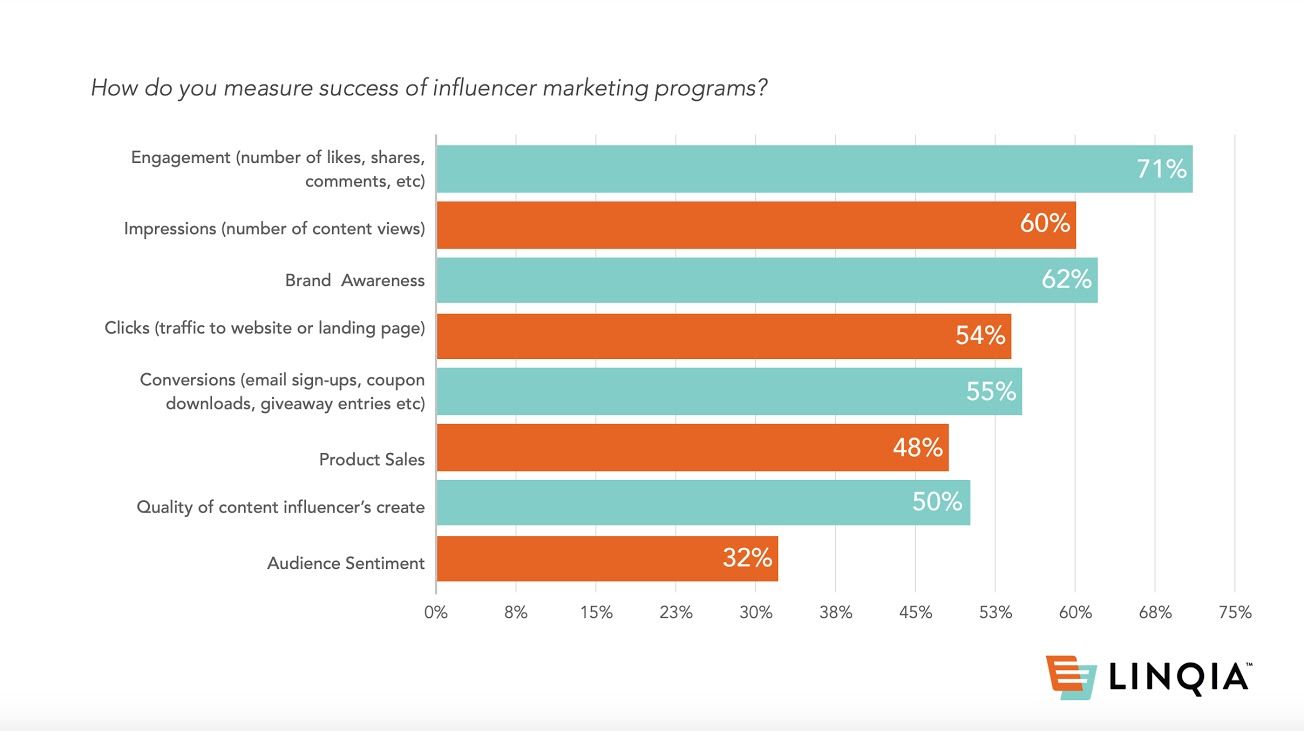
As brands and campaigns get savvier, so will tracking, measuring, and reporting. When measuring the success of influencer programs, respondents were mixed with their assessments but overall, engagements came in on top at 71%, a decrease from last year when engagement was selected by 89% of marketers. Brand awareness and impressions were also important at around 60% each. Linqia assumes the benchmark for content quality as a measure for success will continue to rise. “Quality of the content is now so important, marketers rank it above product sales as a measure of success,” commented Alizadeh. One finding stood out above all others. When evaluating top priorities for influencer marketing, 98% of marketers identified transparency as an important element of influencer marketing. Influencer audience accuracy was the top transparency concern, with marketers wanting to ensure the influencers they work with have real followers. Data shows that fraud is no longer an overwhelming concern, especially when compared to previous years’ reporting. It comes as no surprise that Instagram continues to be the premier platform for influencer marketing, with 97% of marketers planning to use it, while only 16% plan to use TikTok and Snapchat. Instagram was closely followed by Instagram Stories, Facebook and YouTube. “Overall, 2020 will be more sophisticated, more thoughtful, more strategic, and more transparent,” states the report.
Your brand is a perfect vehicle for bringing about positive change in your local community, and if there’s an issue that’s important to you, you’ve no doubt already tried numerous ways to spread the word about it.
With millions wanting to make a name for themselves, the seemingly ‘old guard’ of online influencers need to reinvent their content so they can stay relevant.
But what is the negative impact of 'shock value'?
I’ve spent much of my career working with established affiliate programmes. Recruiting publishers, entering new markets and increasing visibility can deliver strong early growth. Once a programme reaches scale,
Influencer marketing doesn’t need another tool solving one part of the problem. It needs a connected operating layer that brings intelligence, activation and commerce into one scalable commercial channel.