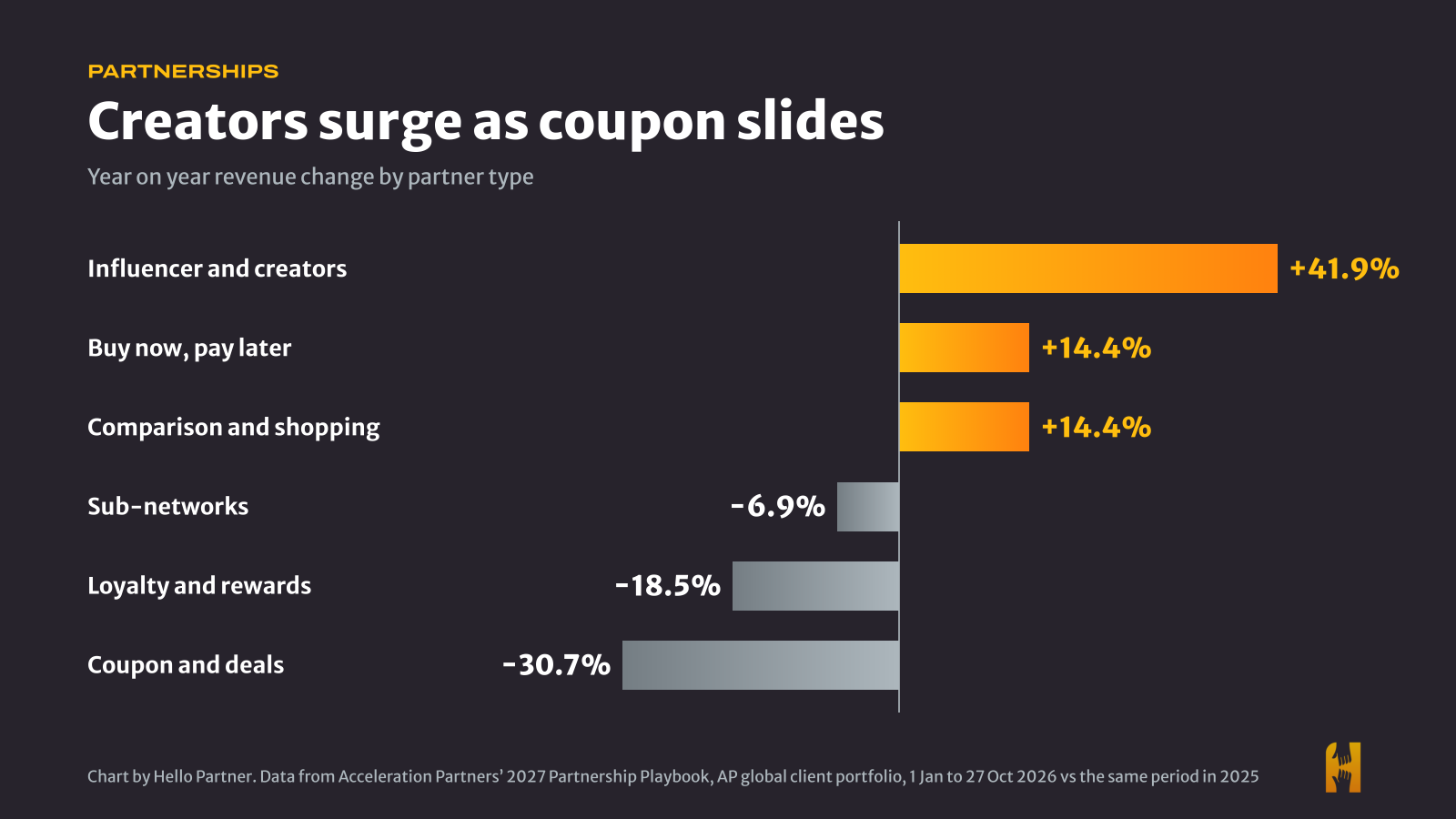
Influencer and creator revenue grew 41.9% year on year across Acceleration Partners' global client portfolio, while coupon and deal revenue fell 30.7%, according to the agency's newly published 2027 Partnership Playbook.
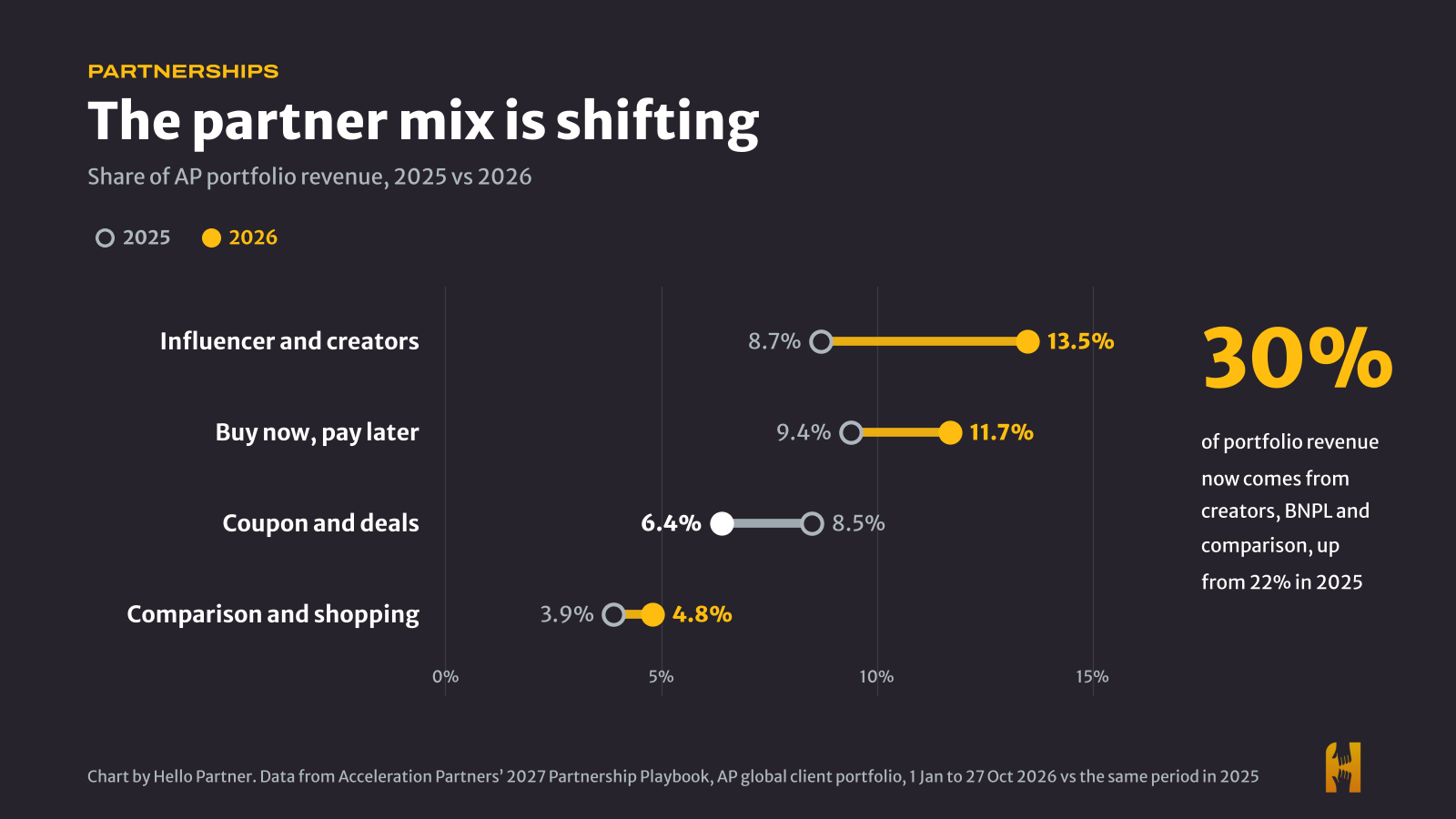
The figures compare 1 January to 27 October 2026 with the same period in 2025. Creators grew their share of portfolio revenue from 8.7% to 13.5%. Buy now, pay later (BNPL) and comparison and shopping partners each grew revenue by 14.4%, with BNPL's share rising from 9.4% to 11.7% and comparison's from 3.9% to 4.8%. Together, the three categories now account for 30% of portfolio revenue, up from 22%.
Coupon's share fell from 8.5% to 6.4%, loyalty and rewards revenue dropped 18.5% and sub-networks slipped 6.9%. The agency stops short of writing coupon off, noting it still converts but now makes up a smaller part of the mix.
The numbers reflect AP's own clients rather than the whole market, and the playbook doesn't say how many programmes are included or whether changes in client mix played a part. Even so, the contrast between partner categories within AP's portfolio is striking.
Affiliates and the AI answer
The playbook argues that AI discovery is giving affiliates a new kind of influence. Across AP's clients, more than 95% of citations in AI-generated answers come from third-party content. Affiliate content makes up 20% to 45% of those citations, and creators and UGC a further 10% to 20%, though AP says this varies widely by vertical. It's a theme that's been building all year, from impact.com's tie-up with Evertune to our own look at how affiliate content performs across LLMs.
Paying for influence
The harder question is how brands reward influence that last click doesn't see. The report points to APMC data from Germany showing an affiliate touchpoint in 24.9% of online transactions, but affiliate as the last click in only 12.4%. In the UK, APMA's 2026 research found more than half of brands name proving incremental value as a top measurement challenge.
AP's answer is a scorecard. For VistaPrint, it built a quarterly incrementality calculator based on click-to-purchase time, customer status and the partner's role in the journey, then moved budget accordingly. Costs fell 23% and average cost per action fell 33%, while revenue rose 2%.
Our view
Cashback and voucher sites still have an important role. They help close sales, and tested properly, plenty earn their keep. But brands relying solely on last-click attribution risk overlooking the creators, content and comparison partners influencing purchases earlier in the journey. Equally, the final click doesn't always tell us whether a sale would have happened anyway. For 2027, the bigger opportunity may be changing how partners are measured and rewarded, not simply who gets recruited.