
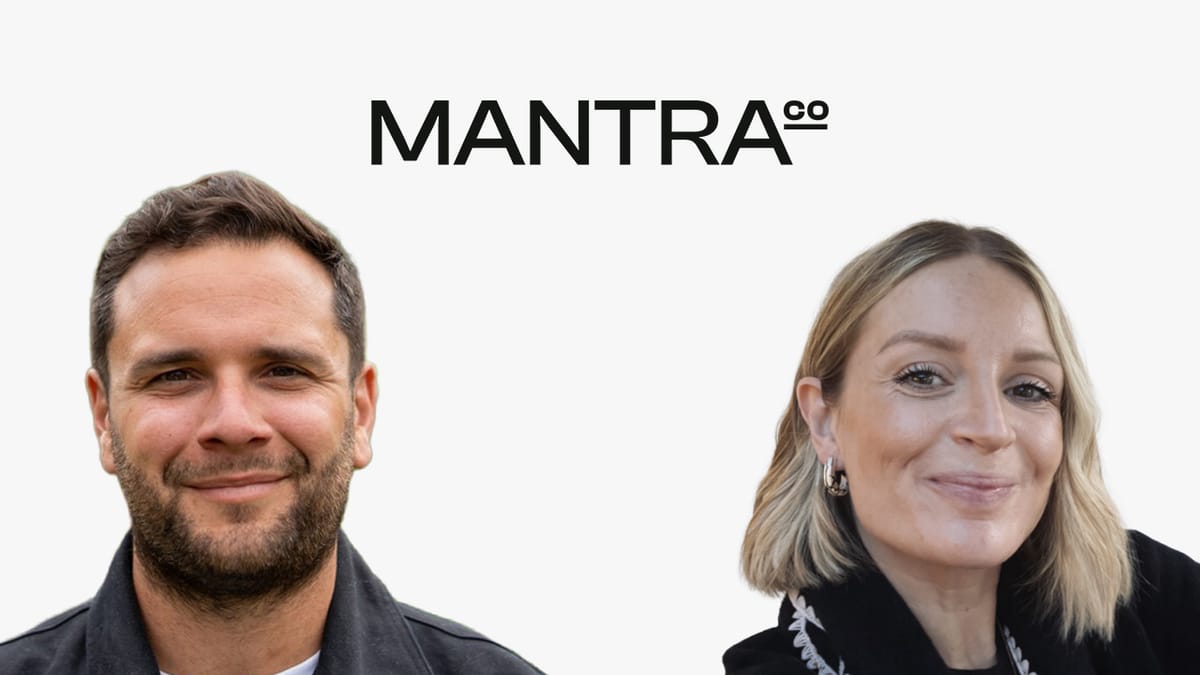
At the start of the year, Dan Harding announced that he would be wrapping up his tenure at Envolve Tech, where he served as Head of Commercial, in order to start a new venture.
Together with Emily Harding, he has founded a new consultancy: Mantra Co.
Announcing the move on LinkedIn, Harding described Mantra Co. as being “built on long-term affiliate relationships and a trusted industry network to help growth-focused businesses shortcut to scale.”
We caught up with the Hardings to learn more about Mantra Co. and their plans for the year ahead.
Sol Wilkinson: What inspired you to start Mantra Co.?
Emily Harding: Between us, having worked across brands, agencies, publishers and a SaaS technology platform from early stage through to scale, it became clear that partnerships often scale before teams have a clear view of what is actually working. Decisions are made under pressure, programmes expand, and understanding tends to develop over time rather than upfront.
Mantra was created as a shortcut to scale. Not by cutting corners, but by helping teams focus earlier on what is most likely to work and avoid growth that does not hold. Our role is to support teams at that stage, bringing operator experience, perspective and sound judgement alongside existing teams, so growth is more deliberate and sustainable.
SW: How does Mantra differ from other affiliate consultancies?
EH: Mantra is not an affiliate agency, and we don’t run programmes day to day. We sit in the middle of the partnership ecosystem, working across brands, platforms, publishers, agencies and networks to help teams make better decisions before scale.
Most affiliate consultancies focus on execution or optimisation. Mantra works slightly earlier, helping teams decide what to prioritise, what to test and when it genuinely makes sense to scale.
We focus on structure, decision making and pacing. That means supporting teams to build partnerships in a way that is intentional rather than reactive, and stepping back once execution is in motion.
SW: What types of businesses or sectors have the most potential to scale through partnerships right now?
Dan Harding: We are seeing the strongest potential in platform-led businesses, where partnerships sit at the centre of growth and need to be scaled deliberately rather than by default.
A good example is the work we are doing with Sientia, where we are supporting brand acquisition through my network and working closely with the team on how partnerships, including Card Linked Offers, are structured, prioritised and scaled as the platform grows.
Card Linked Offers in particular are often positioned as an easy route to scale. In practice, they require far more hands on management and clearer expectation setting than is typically assumed. Part of our work has been focused on understanding how Card Linked Offers are being positioned and sold through agencies and networks, and helping reframe them as a performance-led channel that sits alongside wider partnership activity rather than a set and forget solution.
That includes being clearer upfront about where this model works best, how success should be measured and how it should be integrated with other partners to support sustainable growth.
SW: You have mentioned focusing on long-term partnership relationships. What does that look like in practice?
DH: In practice, it starts with trust and shared context. Over the last 15 years, I have built long-standing relationships across platforms, publishers, brands, agencies and networks. That means conversations start from credibility rather than cold outreach, and expectations can be set more realistically from the outset.
Sitting across the ecosystem allows us to align incentives earlier, be open about what is likely to work, and avoid partnerships that do not have a clear role or path to growth. The aim is not to build the biggest possible programme, but to support fewer, better aligned partnerships that can evolve over time.
SW: What is the biggest mistake companies make with affiliate or partnership strategies?
EH: Trying to move too fast before teams are confident in what is driving results and who is accountable for them.
When partnerships are treated as a bolt on channel, ownership can become blurred and decisions default to habit rather than intent. Measurement is often unclear, which can lead to programmes growing before results are properly understood.
It is also important to recognise that platforms often have a difficult job proving incrementality in real time. Expectations can outpace what data is realistically available early on, particularly as programmes scale. Without shared understanding across brands, agencies and platforms, that gap can undermine confidence even when underlying performance is strong.
Mantra helps by slowing things down slightly at the right moments and encouraging better questions early, so growth holds over time.
SW: How do you see the affiliate landscape evolving over the next two to three years, especially with AI and platform changes?
EH: We expect the focus to move away from pure activity metrics and towards confidence in decision making.
AI and platform changes will surface more data, but they will not remove the need for judgment. The teams that do well will be those that understand the role partnerships play within their wider growth mix and can make informed decisions as programmes evolve.
SW: For businesses just starting to explore partnerships, what should they prioritise first?
EH: Direction before activity.
That starts with being clear on ownership, objectives and review points before onboarding partners. Getting those fundamentals right early makes partnerships far easier to manage and scale later.
Alongside this, we are planning working sessions with trusted partners to deepen our understanding of onboarding, data, measurement and reporting across different partnership models. This helps brands know what to look for and supports platforms in setting clearer expectations earlier.
SW: What is the plan for the year ahead?
DH: We are being deliberately selective. There are a lot of opportunities coming through my network, and the focus this year is on choosing where Mantra can genuinely add value, particularly with platforms and brands at key growth stages.
We will stay lean, work closely with a small number of partners, and focus on helping them reach the right scale more quickly rather than trying to do everything at once.