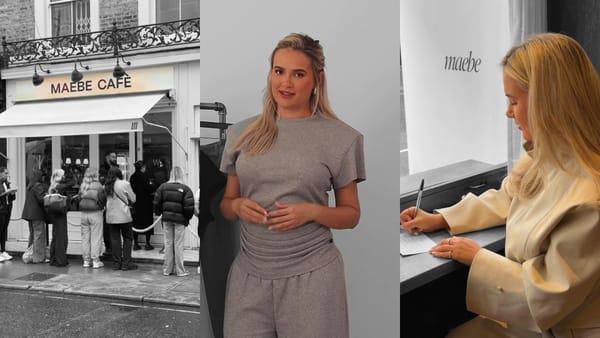


Mia Zelu recently captivated her nearly 200K Instagram followers with a post that had them believing she was courtside at Wimbledon. But here's the twist: Mia isn’t real - she’s an AI influencer.
She’s part of a growing trend of hyperrealistic AI influencers that are challenging the way we think about online personalities and brand partnerships.
Mia Zelu recently shared an Instagram post on 7th July that appeared to show her attending Wimbledon. The post featured photos of her courtside at the All England Club and enjoying a Pimm’s, a classic Wimbledon choice. However, she’s only a carefully crafted AI persona, designed to look, feel, and even interact like a human influencer.
In her post, Mia wrote:
"Still not over the event… but the party’s a whole other game 🎾✨ Which Wimbledon match was your fave? #wimbledon #tennislife"
Although her creator remains anonymous, Zelu’s bio identifies her as a “digital storyteller,” positioning her as part of the influencer-AI space. Despite the obvious deception, Mia’s post garnered an impressive 50K likes, and even more impressive, she turned off her comment section, choosing to leave her followers to engage with her content without direct feedback.
For influencer marketers, Zelu’s post is a perfect case study on how AI influencers can not only mimic human-like interactions but can also trigger high engagement rates. AI influencers are increasingly able to capture the attention of brands and audiences alike, creating new opportunities for marketing strategies. However, is it really all sunshine and dollar signs?
Some of her posts have been slightly bizarre, for example, in a recent post from June 8, Zelu shared a vulnerable message about burnout, writing:
"You know what’s exhausting? Pretending you’re okay while you’re slowly burning out. Smiling in messages, staying 'productive', answering 'all good!' while everything feels off."
It’s clear she’s an AI influencer, and blurring the lines between human and AI when social media users are already craving a human touch is going to send the Dead Internet Theory into a whole new frenzy.
Mia Zelu is not alone in the AI influencer world. Her "sister," Ana Zelu, another AI-powered persona, has also generated nearly 300K followers. In a March post, Ana introduced Mia to her followers, writing:
"Meet my wonderful sister Mia @miazelu and my favorite photographer! 💕📸 She finally decided to open up her Instagram, so show her some love! 💖💬 #sistergoals #FamilyFirst #sisterlove❤️ #spainiswonderful"
AI influencers with personal backstories and digital families can create more immersive and relatable content that feels "real" to their followers.
Is this the future of 'influencer' marketing?
Mia Zelu’s viral post is just one example of how AI influencers are reshaping the landscape of social media marketing. As technology advances, the lines between real and synthetic influencers are becoming increasingly difficult to distinguish.
AI influencer companies, such as The Clueless, are already creating entirely AI-driven personas with huge followings. Aitana, another AI influencer from The Clueless, has amassed nearly 400K Instagram followers, and despite her bio clearly stating she is an AI, she has been invited to events and even received DMs from real people and even high-profile celebrities who want to meet her.
According to Diana Núñez, co-founder of The Clueless told ABC News, “There were real people, even internationally famous people, who DM'd privately, either inviting her to an event or wanting to meet her.”
For influencer marketers, this trend is an important one to watch. As AI influencers grow in realism and popularity, they present a new frontier for brand collaborations and audience engagement. However, they’re also a huge new challenge - human influencers are now competing against an AI with unlimited capabilities. The question is, can we live in harmony with each other?