

2026 is set up to be the creator economy’s biggest year yet, but the way creators and marketers work together is changing quickly. Collabstr’s 2026 Influencer Marketing Report, based on more than 21,000 collaborations, shows a clear shift toward smaller budgets, content-first strategies, and scalable creator partnerships.
Here are seven key trends shaping influencer marketing in 2026.
1. TikTok is no longer the default platform
In shocking news, TikTok-specific campaigns dropped 48% year over year, falling behind both Instagram and platform-agnostic UGC campaigns.
While short-form video remains essential, brands are moving away from platform-first strategies in favour of flexible content they can reuse across channels. Reduce, re-use, recycle!
2. UGC has become a core strategy
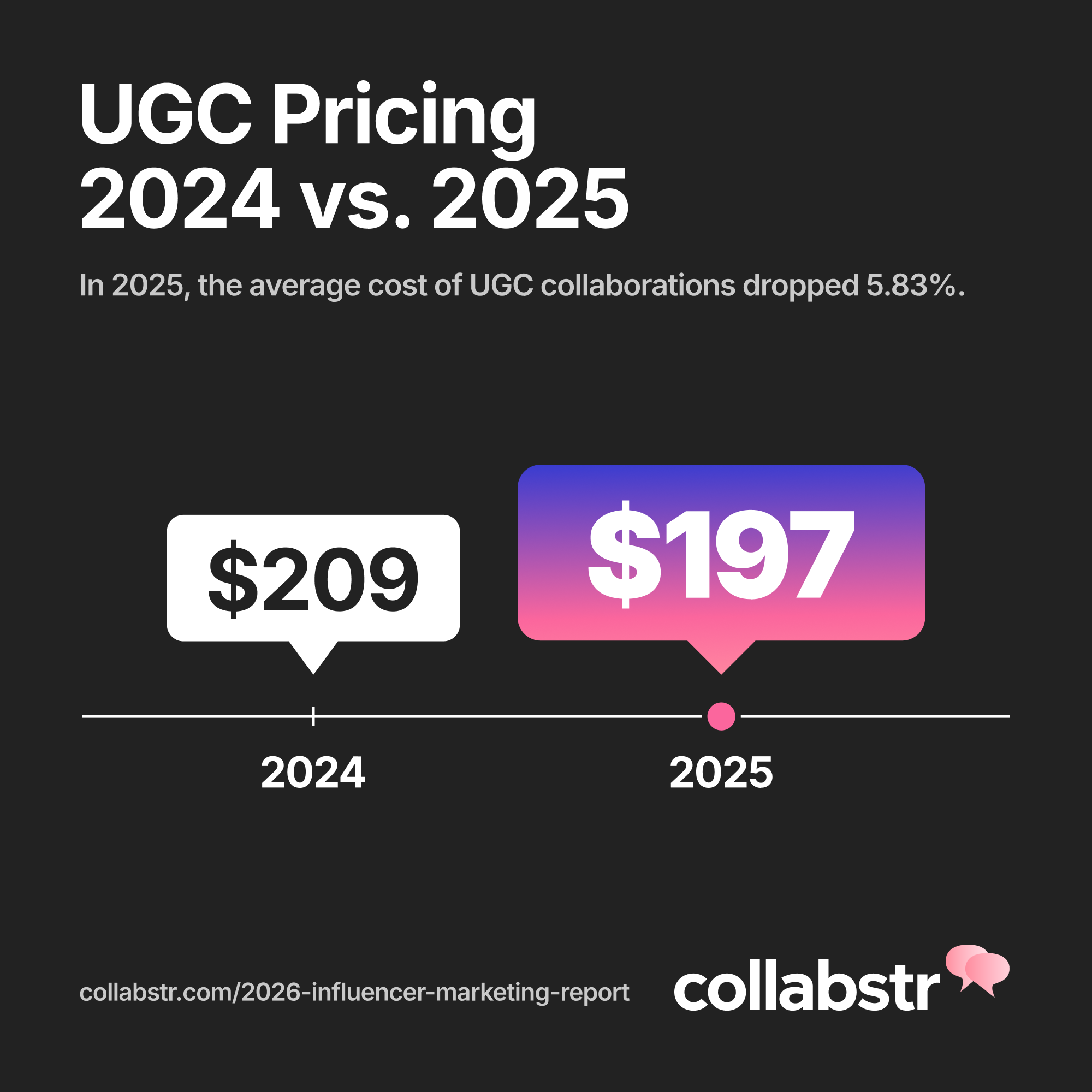
UGC campaigns more than doubled year over year and now account for 35% of all collaborations on Collabstr. With average costs under $197 (a 5% decrease from last year) and higher conversion performance than brand-produced content, UGC is increasingly central to influencer marketing efforts. Great news for growing UGC creators.
3. Small budgets dominate influencer spend
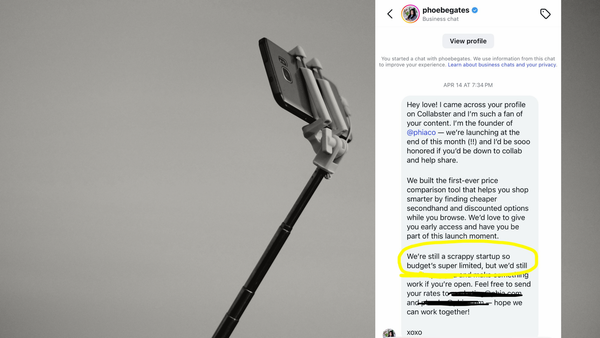
Are the days of thousand-dollar deals behind us? Nearly 80% of influencer collaborations cost under $300, while only 2% exceed $1,000. Brands are prioritising frequent, lower-risk collaborations over high-budget partnerships, favouring testing and scale over singular campaigns.
4. Expertise-driven niches command higher rates
While lifestyle, beauty, and fashion remain popular, the fastest-growing and most expensive niches are expertise-based.
Skilled trades, education, entrepreneurship, and health-focused creators attract high-intent audiences and deliver stronger conversion potential. In 2026, it pays to be ultra-niche.
5. Short-form content drives reach, long-form builds trust
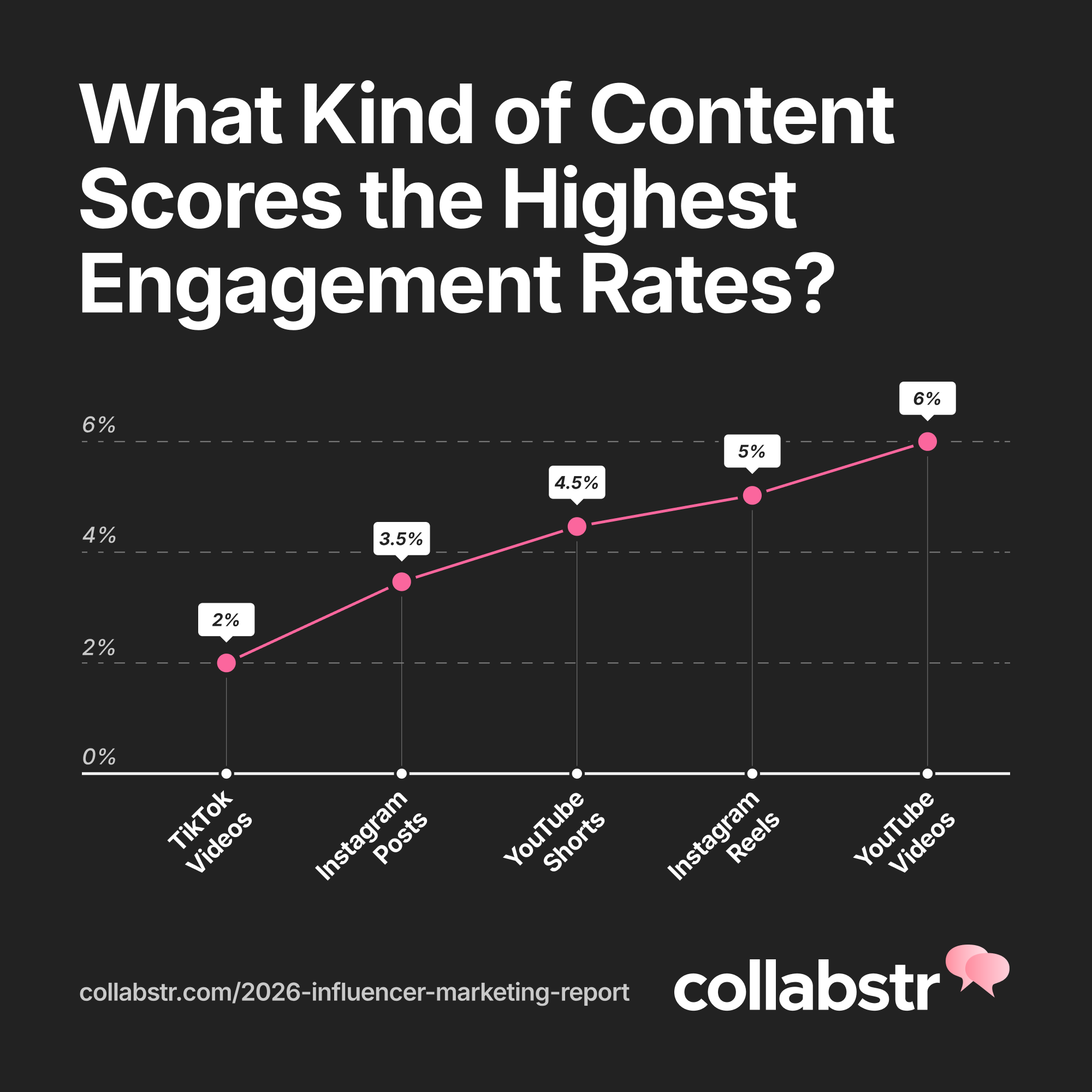
Instagram Reels, TikTok videos, and YouTube Shorts generate the highest reach, but long-form YouTube videos lead in engagement. It seems like people are getting sick of having short attention spans.
Brands are increasingly using short-form content for awareness and long-form content to build credibility and trust.
6. Influencer marketing is being shaped by small brands
Small and mid-sized businesses are driving much of the growth in influencer marketing, particularly in UGC campaigns. Their focus on ROI and reusable content is reshaping how creators package, price, and deliver their work.
7. The industry is becoming content-first, not platform-first
Across platforms, budgets, and niches, the strongest signal from the data is a shift toward content-first strategies. Brands want adaptable assets, not single-use posts. It’s all about making content purposeful over posting a large quantity.
The bottom line
Influencer marketing in 2026 is defined by scalability, usability, and measurable impact. Goodbye, huge numbers and huge creators, hello data and niche communities.
The creators and marketers who succeed in 2026 will be those who think beyond platforms and focus on delivering content that works across the entire marketing funnel.