

That’s why successful brands prioritise influencer retention: that is, keeping the same influencers engaged month after month, quarter after quarter. By focusing on strengthening your existing connections to fans, you can maximise the lifetime value of each relationship and reliably expand your earned media footprint, instead of constantly trying to win over new ones.
Read on to learn more about how to measure influencer retention, why it’s integral to effective influencer marketing, and how you can monitor and leverage retention data to strengthen your brand’s online fan community and make a lasting impact on consumers.
How do you measure Influencer Retention?
Before you put together a plan for retaining influencers, it’s important to understand how the metric is calculated. We like to approach it in terms of quarters: influencer retention refers to the proportion of content creators that mentioned your brand in a given quarter, who also mentioned you in the quarter before that.
So, if one-hundred influencers posted about my brand in Q4, and 60 of those same influencers had also posted about my brand in Q3, my retention rate for Q4 would be 60%. (Even if I had forty additional influencers talk about my brand for the very first time in Q4, my retention rate would still be 60%.) In a healthy influencer community, retention steadily increases over time, as more and more content creators demonstrate a genuine and consistent brand affinity.
Why does influencer retention matter to marketers?
Keeping track of influencer retention benefits brands for a number of reasons, but the simplest one brings us back to the ‘best friend’ analogy: content creators who have time-honored connections to your brand will create the most compelling, and most valuable, content about you. This is especially true when you consider the long-term impact of influencer relationships.
Sure, a one-off mention from an influencer with a large following will probably collect more impressions and likes than a single post from a smaller influencer. But if that smaller influencer mentions you every month for a year, they’re driving significantly more exposure and enthusiasm for your brand in the long run. In this sense, retaining influencers maximizes both the volume and quality of content creation about your brand over a sustained time period—so it’s no surprise that top-performing brands in Earned Media Value (EMV) also boast stronger retention than their competitors.
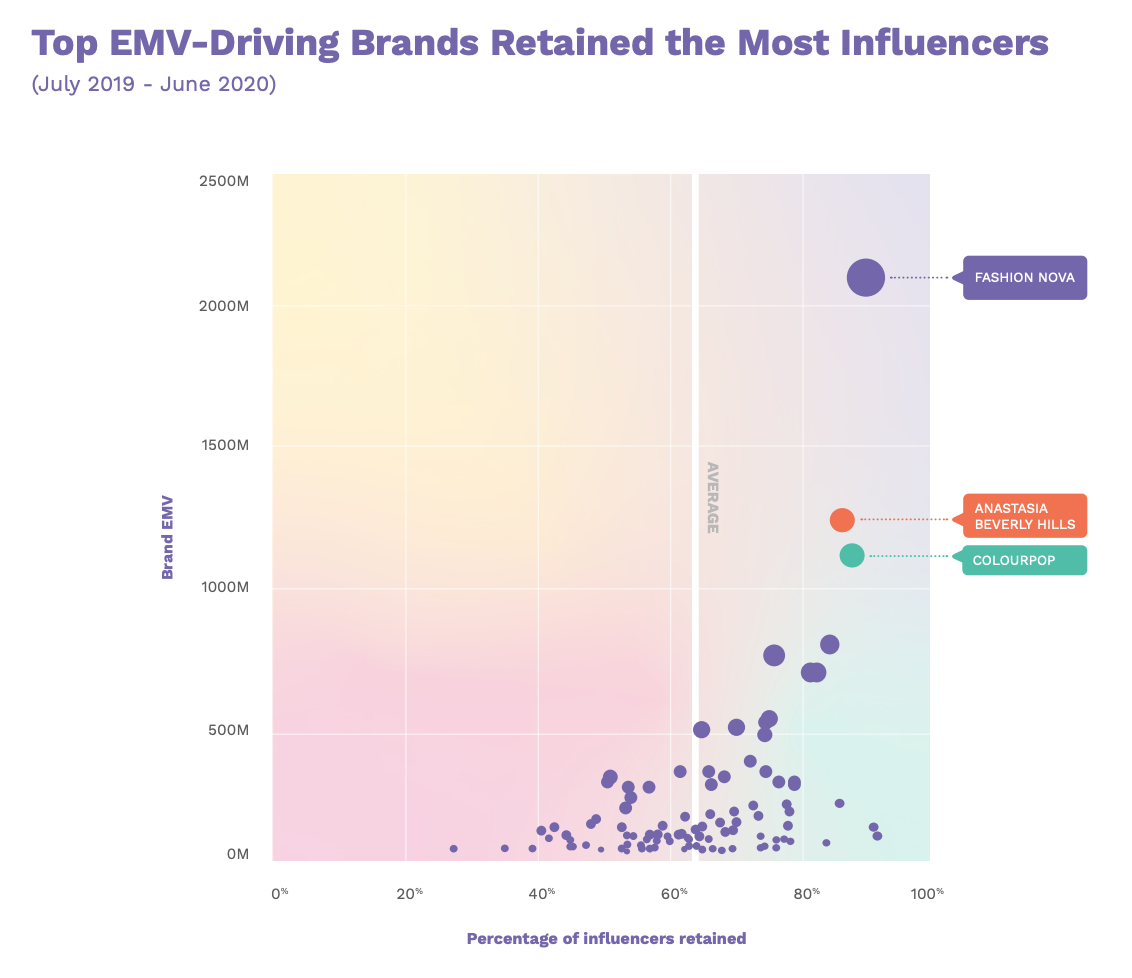
Maintaining ongoing influencer relationships helps you organically grow your community of fans. This might seem counterintuitive—after all, doesn’t devoting more resources to retaining existing advocates mean spending less time finding new ones? Think about it this way: are you more likely to buy a pair of shoes because a salesperson is telling you to, or because you like the way they look on someone you admire? When genuinely passionate influencers continue to champion you, they inspire other content creators with the authenticity of their endorsements, saving you the legwork of engaging potential fans to post about your brand.
How can I use Influencer Retention data to improve my brand’s earned media performance?
First and foremost, keeping track of your brand’s influencer retention over time can help you understand the holistic strength of your influencer marketing program. If your retention is increasing, that’s a signal that the strategies you’re implementing are working: more and more influencers see you as a go-to brand and feel compelled to continue sharing what you have to offer with their followers. If your retention figure remains the same, or decreases, that means you have an opportunity to further invest in sustaining influencer relationships.
Setting goals
When setting goals for your brand, keep in mind that there’s no one-size-fits-all gold standard for “good” retention! What strong influencer retention looks like can vary based on brand size (it’s easier for brands with larger communities to retain more influencers than brands with smaller communities), vertical (apparel brands tend to retain more influencers than luxury fashion brands, because luxury fashion brands often rely heavily on short-term celebrity partnerships), and the overall maturity of brands’ influencer marketing programs. Be sure to take all these factors into account to set realistic, achievable retention targets.
The influencer economy can prove volatile, especially for brands accustomed to generating hype through transactional, one-off partnerships. By refocusing your strategy on nurturing genuine connections with consistent advocates, you can not only inspire ongoing conversation but also let authentic enthusiasm for your brand shine. Here are some key steps brands can take to improve their influencer retention and achieve sustainable momentum on social media:
- Identify your loyal advocates. You wouldn’t suggest making things official with your partner before you’d spent a decent amount of time together (even if you did consider it on the first date). Similarly, your chances of forging a long-term relationship with an influencer are higher when they’ve already posted about you with some regularity. By keeping track of how frequently influencers in your community mention you, you can identify your most passionate champions, and offer them some extra TLC to ensure they stay active.
- Conduct consistent, deliberate outreach. The best way to motivate influencers to post about you regularly? Reach out regularly. Stay top-of-mind for your fans by continually re-engaging them with product sends, virtual get-togethers, and other thoughtful gestures. Because you likely don’t have the time or budget to keep in touch with every influencer in your network, optimize your efforts by reserving the most resource-intensive activations for loyal fans.
- Ensure partnerships are collaborative and mutually empowering. Like brands, content creators are eager to expand their own audiences, raise their profiles, and flex their creative muscles. So it makes sense that they’ll be most motivated to continue working with brands that help them achieve their goals. Even if a product collaboration isn’t feasible, brands can empower influencers by reposting their work, granting them creative agency over branded content, and tapping them for campaigns that align with their values and objectives.


